
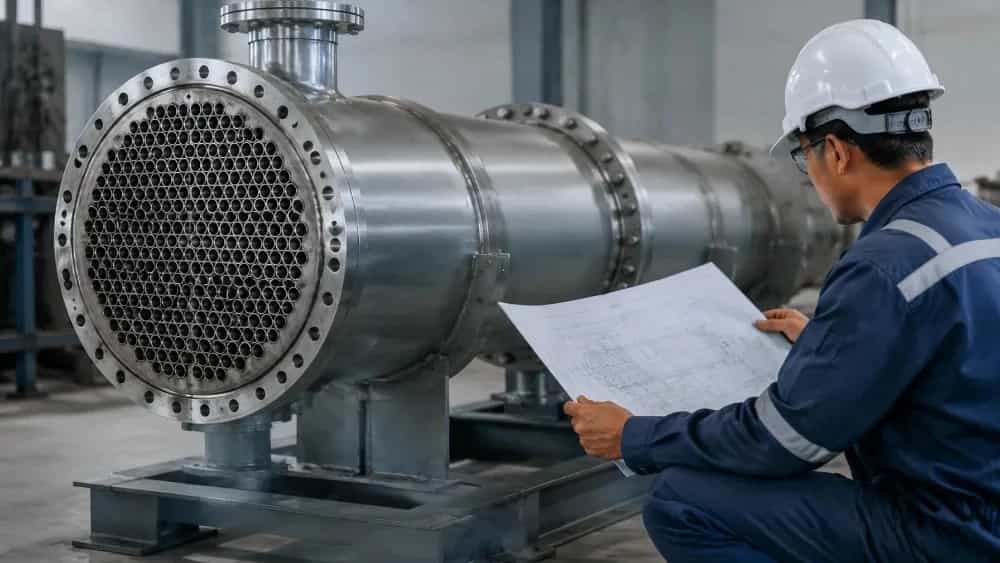
You receive a price offer for the heat exchanger; The second proposal is significantly different from it. If both manufacturers have only seen "capacity" and "body material", it is still unclear which proposal is suitable for the actual operation of the petrochemical unit. The root of the price difference is often formed before construction and in incomplete definition of process conditions, scope of inspection and delivery documents. This issue is more important for the orders that are supposed to be installed in Mahshahr, but the technical review or coordination of their construction is done from a city like Shiraz: the specifications, responsibilities and cost of transportation should be clear from the beginning.
How to inquire about the price for building a petrochemical heat exchanger in Mahshahr?
A valid price inquiry starts with a common specification sheet, not asking the price of each device. Until the flow rates, inlet and outlet temperatures, design pressure, fluid characteristics and inspection requirements are known, manufacturers' proposals do not have the same basis for comparison.
First, the thermal task of the device must be determined: is the exchanger going to heat a fluid, cool it, condense steam or be used in another circuit? Then, the conditions of both sides of the converter, including flow rate, temperature, working pressure and design pressure, allowable pressure drop, possibility of sedimentation and installation space limitations, should be recorded. The final price is a function of the selected design and the actual range of construction and delivery; Not just metal weight or heat exchange surface.
For shell-and-tube heat exchangers, API 660 covers areas such as mechanical design, material selection, fabrication, inspection, testing, and preparation for shipment. For this reason, it should be clear in the inquiry which technical requirements and which delivery documents are part of the manufacturer's proposal.
Which variables change the type of heat exchanger and the construction price?
The choice between the types of heat exchanger depends on the behavior of the fluid and the operating conditions, not on a fixed rule about which model is cheaper. The main difference between the proposals is usually seen in the level of heat transfer required, the material of the parts in contact with the fluid, the possibility of cleaning and the requirements of construction and inspection.
Process conditions and choice of heat exchanger type
First, the thermal performance and allowable pressure drop of both sides should be calculated and confirmed. If there is a possibility of clogging or the need to open and clean, the repair access should be checked at the same time as the thermal efficiency.
In the shell and tube heat exchanger construction, the arrangement of the tubes, the type of tube bundle and the possibility of its removal affect the repairability and cost. Plate heat exchanger can also be considered as an option in the right application, but the type of plate, sealing method, fluid compatibility and pressure and temperature conditions must be confirmed in the design of the same project. The API lists separate standards for shell and tube transducers and framed plate transducers; These two should not be considered as substitutes based on an initial price.
Material, inspection and scope of delivery
Two converters with the same heat capacity may require different materials and inspection programs. To compare prices, it should be clear what components, tests and documents exactly each offer includes.
The purchase request should mention separately the material of the parts in contact with the fluid, the material tracking requirements, the type of tests required, the final drawings and the delivery conditions. TEMA standards have also provided an updated technical specification sheet to more clearly define transducer design requirements; A sheet that can be the starting point of coordination between the employer and the manufacturer.
Comparison standard | Shell and tube heat exchanger | Plate heat exchanger |
|---|---|---|
Base Selection | Inspection of process conditions, mechanical arrangement and maintenance needs | Inspection of plate type, sealing and fluid compatibility |
Access for cleaning | Depending on the design and the possibility of accessing the pipe handle | Depending on the type of construction and the possibility of opening the set |
Items affecting the price | Pipe, shell, Tube sheet, internal parts and inspection schedule | Sheets, frame, sealing and inspection schedule |
Key question from the manufacturer | Does the method of cleaning and removing the tube bundle specified? Is it? | Is the material of the plate and sealing compatible with the working conditions? |
This table is a preliminary screening guide, not a substitute for thermal and mechanical design. The final decision should be made with the actual service specifications and project requirements.
I, Mr. Soltani, when reviewing an inquiry, I do not look for the price number first; I look for the assumptions that the number is based on. If the assumptions of the two manufacturers are not the same, price comparison alone can lead to a choice that ends up costing more to build or operate.
In reviewing the orders in the field of petrochemical equipment manufacturing, I clarify three things before comparing the offers:
- I separate operational data from design data. Normal operating temperature and design basis temperature are not the same concept; Mixing them can change the choice of materials or the mechanical design.
- I want to clean up the scenario. Just writing "repairable" is not enough; It should be known which side of the converter is more prone to sedimentation and how practical access to it is provided.
- I read the proposal line by line. The map, material documents, tests, packaging and transportation to the delivery location should be known; Otherwise, the initial price does not show the total cost of the order.
In Sharkat Rasa Mebadat Sazan South, the technical look at the inquiry begins with this distinction: what is certain about the process and what still needs the employer's approval. For a project with the destination of Mahshahr, even if its coordination is done from Shiraz, this transparency prevents costly back and forth in the construction phase. TEMA's proposed specification sheet also emphasizes a more precise definition of converter requirements.
Roadmap for price inquiry and construction of heat exchanger
Send a single inquiry package to all manufacturers to get comparable offers. Then evaluate the price along with technical compliance, documentation, timing and scope of delivery.
- Define the service: Record the function of the converter, specifications of both fluids, flow rates, inlet and outlet temperatures, and operating conditions.
- Declare the limitations: Specify the design pressure and temperature, allowable pressure drop, installation space, connections, and cleaning requirements.
- Write the basis for design and inspection: Project standards, material requirements, tests, and deliverables in the price request. bring API 660 is the reference related to the scope of manufacturing and inspection of shell and tube exchangers in the petrochemical industry.
- Unify the scope of business: Ask all bidders for the place of delivery, responsibility for packing and shipping to Mahshahr, delivery time, and items outside of the price.
- Build a matching table: Check each proposal in the columns “Compliant”, “Needs Clarification” and “Out of Scope”; Then go to compare the amount.
To complete this path, three related topics are also worth considering separately: the initial selection among heat exchanger types, the construction details of shell and tube heat exchangers, and the preparation of price request documents.
جهت دریافت اطلاعات بیشتر تماس بگیرید.
Conclusion and final opinion
A good price is a price that you can check the technical assumptions and scope of the commitment behind it. To build a heat exchanger in the Mahshahr Petrochemical Project, first complete the service specifications and then weigh the manufacturers' proposal on a common basis.
From my point of view, Mr. Soltani, a short technical discussion before issuing an offer is more valuable than announcing a number that changes later when the specifications are clarified. If you are preparing an inquiry for your project, put together a process data sheet and delivery requirements, and discuss any uncertainties with the technical team of Sharkat Rasa Makwad Sazan Zabsan.
