
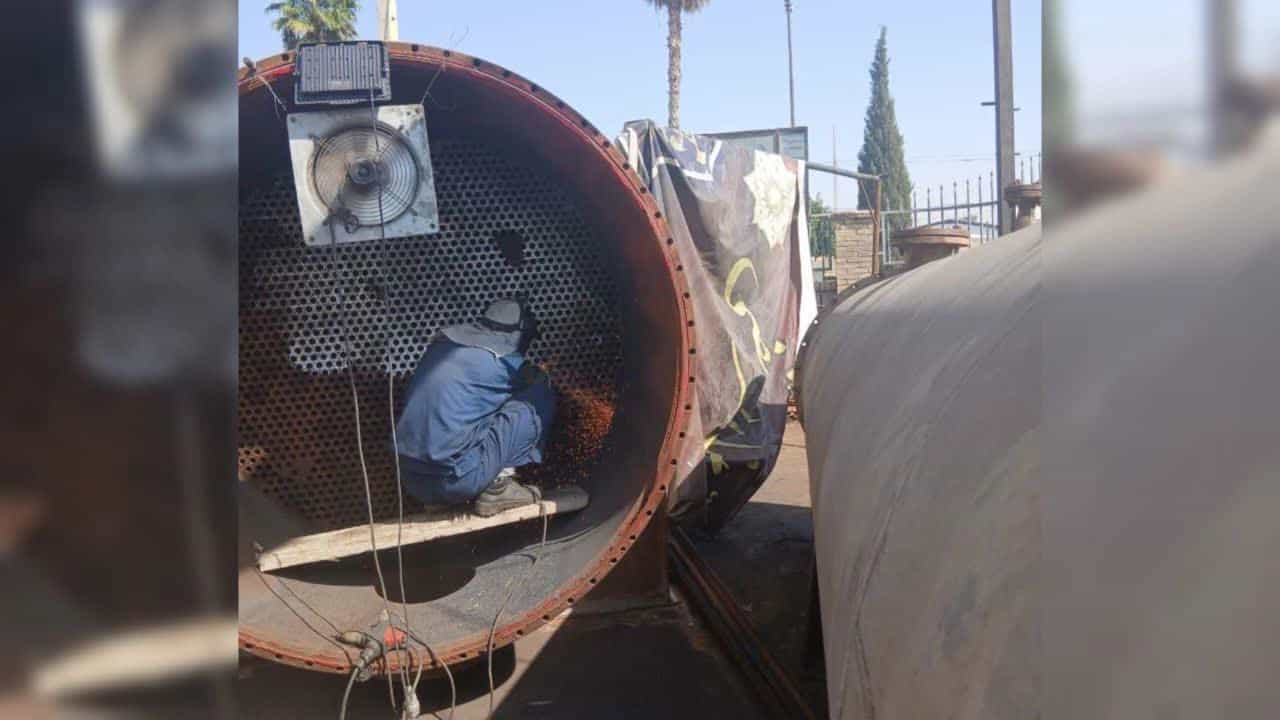
In-refinery repairs and manufacturing of specialized industrial equipment is a chain of heavy engineering processes including on-site troubleshooting, replacement of tube bundles, welding of special alloys and reproduction of piping and pressure vessels, which is implemented in order to minimize downtime of production lines in overhaul phases. By combining non-destructive technical inspection (NDT) and standard protocols such as ASME and API, this operation brings the risk of hydrocarbon leaks and thermal pressure drop in upstream and downstream process units close to zero. The implementation of these measures requires mastering the metallurgy of corrosion-resistant metals in the sour atmosphere and humid climate of the southern operational areas.
Hidden challenges in the overhaul of process equipment in the south
According to field observations in Khuzestan and Bushehr industrial projects, most of the metallurgical damages occur due to the simultaneous presence of sour gas, saturated environmental humidity and high surface temperature in the equipment. Severe sedimentation, stress corrosion cracking (SCC) and mechanical erosion of walls in this climate multiply the need for immediate and on-site intervention.
On-site or in-refinery repairs become critical when it is not possible to move heavy equipment off-site due to logistical reasons or shot-down time constraints. In this situation, specialized teams should move portable machining, hydraulic and local stress relief (PWHT) equipment directly to the vicinity of the operating units.
Engineering standards in the reconstruction of heat exchangers and drums
Shell and tube heat exchangers and separation towers are the bottleneck of the thermal efficiency of any refinery. Failure in this section is usually indicated by a drop in flow rate, an increase in pressure drop, or the mixing of process fluids.
Non-destructive inspection and thickness analysis
Before any mechanical action, accurate mapping of the corrosion rate is done through Advanced Ultrasonic Tests (PAUT) and Eddy Current. The obtained data determines whether the equipment needs surface coating (Cladding), metal spray or complete replacement of the pressurized part.
The process of retubing and machining sealing surfaces
In practice, it has been observed that the main damage of tubesheets is caused by repeated thermal expansion and incorrect torque of the tubes. The use of modern hydraulic retubing along with portable machining of flanges (Flange Facing) restores sealing tolerances without the need to cut the entire tank.
Custom manufacturing of sensitive parts; Overcoming supply chain constraints
Quick supply of special industrial equipment such as plate converters, large control valves and special steel elbows with duplex or inconel grades in the local market is always associated with the risk of customs delays and quality deviations.
Material localization and specialized casting
Manufacturing of industrial substitutes is done using dimensional reverse engineering and quantum analysis of the original material. Redesigning and reproducing in-house parts not only eliminates the risk of mechanical mismatch, but also cuts capital downtime during repairs by half.
Welding of resistant alloys and tests under pressure
Performance of approved welding procedures (WPS/PQR) under ASME Sec IX codes is the mainstay of quality assurance in the construction of tanks and heating coils. Examining the connection quality in acid fluid transmission lines without these certificates is considered an irreparable error in operational safety.
Downtime reduction and mechanical integrity monitoring with South Transducer Express
The operational experience of expert teams in the repair phase shows that the coordinated management of inspection, disassembly, mechanical repair and hydrostatic testing in a tight time window is the main factor in the quick return of units to the production circuit.
Resa Company of Converters of the South has minimized the time interval between failure detection and final repair of heavy equipment by establishing equipment manufacturing capabilities and workshop fleet in the industrial geography of the south of the country. The combination of continuous inspection and relying on manufacturing standards will guarantee the durability of the equipment after the restart of the refinery.