
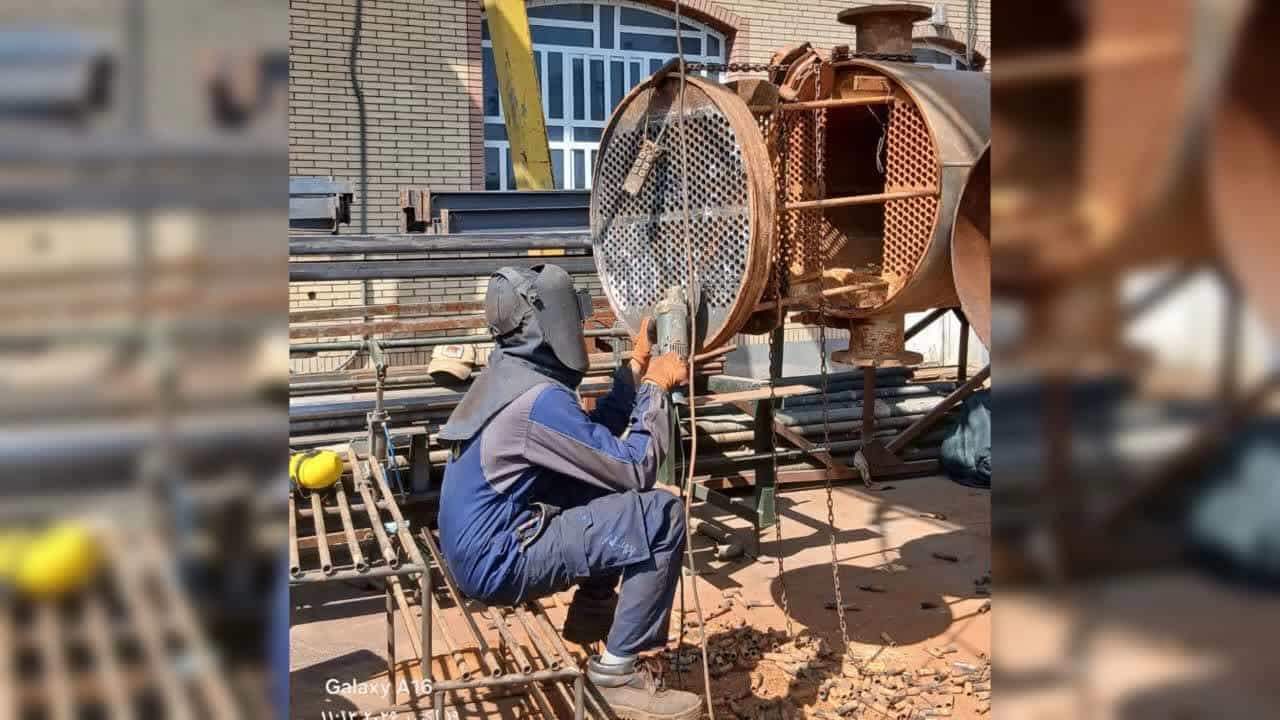
Direct ordering and manufacturing of industrial boilers, chillers and heat exchangers means accurate calculation of fluid parameters, heat transfer coefficient and permitted tolerances according to the climatic and process conditions of each factory. Buying directly from the main manufacturer prevents the loss of efficiency due to the selection of the equipment catalog and reduces the risk of premature corrosion of the material to zero. Rasa Mabadd Sazan Zaubhan Company designs and manufactures these heavy thermal and refrigeration systems based on global engineering standards such as ASME SEC VIII and TEMA in order to guarantee the endless operation cycle of the production lines.
Why direct ordering of heating and refrigeration equipment is better than ready-made purchase
Purchasing installation systems from the intermediary market usually forces industries to forcefully adapt the production line to the nominal capacities of the catalogs. In oil, gas, petrochemical, and food industry projects, the smallest difference in fluid flow rate or operating temperature disrupts the stability of the entire cycle. In practice, it has been observed that about forty percent of chillers and boilers purchased from middlemen face the common phenomenon of thermal shock or cavitation after installation; A factor that occurs simply because of not seeing the seasonal deposition of water and the climate of the installation site. Ordering directly from the foundation manufacturer provides the possibility of checking the water analysis of the area, the allowable pressure drop of the piping route and the acid corrosion of the fluids before starting turning and rolling.
Risks of market equipment without material ID
Improper supply of pressurized sheets and seamless pipes is one of the major disadvantages of buying ready-made equipment in the market. To reduce manufacturing costs, many intermediates use untested welded pipe or low-grade construction sheets that quickly yield to stress at high operating temperatures. At the time of construction, the engineering manufacturer is required to provide the client with an approved material certificate, non-destructive welding tests, and an official birth certificate.
Engineering basics in custom shell and tube heat exchanger manufacturing
Shell and tube heat exchangers are the backbone of heat exchange in heavy installations. The efficiency of a heat exchanger has a direct relationship with the type of pipe arrangement, the dimensions of the baffles and the type of material selected. According to our hydraulic calculations in various projects, changing the angle of the baffles from 45 to 30 degrees can significantly curb the unauthorized pressure drop of the pumps and prevent the destructive vibrations of the tube bundle.
The importance of alloy selection and its compatibility with acidic and salty environments
In humid climates and southern regions of the country, evaporation and extreme salinity of water is a constant challenge for engineers. The traditional use of uncoated copper or carbon steel in these systems leads to pipe punctures and catastrophic mixing of fluids after two years. In Rasa Mebadat Sazan Zaubun company, the design of bundles is made with resistant alloys such as titanium, stainless steel 316L and Monel based on the sedimentation conditions of each factory's water analysis in order to increase the life of the system up to three times of the common samples in the market.
Safety rules and metallurgical standards in the construction of industrial boilers
Steam boilers and hot water tanks are under critical pressure with very high life and financial risks. Boiler design and construction requires unconditional compliance with BS EN 12953 and steel boiler construction codes. Meanwhile, the thickness of the sheets of the combustion chamber and the way of connecting the tubes to the grid play a vital role in preventing the phenomenon of thermal fatigue.
New welding techniques and quality control tests (NDT)
The quality of the boiler is summed up in the quality of its penetrating welds. The boiler manufacturing process is unverifiable without conducting non-destructive ultrasonic, radiographic and liquid penetrant tests. The de-stressing of the furnace after the welding of the main body is completed ensures that the residual stresses resulting from the electric arc do not cause structural deformation or small cracks under the maximum load in the long term.
Design and manufacture of industrial compression chillers suitable for tropical areas
Industrial air conditioning chillers are not commercial; These devices are responsible for the temperature stability of plastic injection lines, reactor processes and pharmaceutical cooling in twelve months of the year. The big challenge of chillers in hot seasons is tripping due to the high temperature of the condenser caused by the ambient temperature above 50 degrees Celsius.
Selection of compressor and stage capacity control
Using screw compressors equipped with step capacity control and inverter is the expressive response of southern converter manufacturers to severe summer thermal fluctuations. The construction of air condensers with additional exchange surface and Goldfin or Bluefin anti-corrosion fins makes it possible for heat exchange to continue even under direct sunlight without a drop in cooling load.
The economic benefits of eliminating intermediaries in equipping heavy equipment
Direct communication with the manufacturer's technical unit eliminates delivery time, drawing errors and excess costs. In custom manufacturing, the employer's budget is spent precisely on increasing alloy quality, high-quality tooling equipment, and safe steel thickness, not on parts brokerage profits. This transparency in procurement allows the employer's engineers to be objectively present in all stages of hydrostatic testing and approval of phased inspections.