
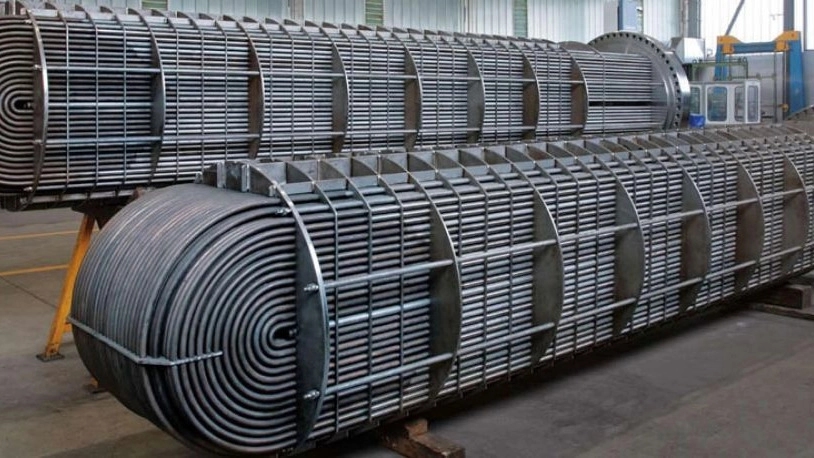
Heat exchanger or heat exchanger is a device in which heat is exchanged between two fluids or a cold and hot source, and the purpose of using this technology is to cool or heat one fluid with the help of another fluid, to dissipate heat to the environment. or cooling and heating a space.
Heat exchangers are an important part of most thermal, refrigeration, energy and transportation systems and facilities.
Usually in heat exchangers, hot and cold environments are in direct contact. with each other are not and are separated by a solid wall. At the same time, there are other types of heat exchange devices that establish direct contact between two environments (direct contact cooling towers). Mass transfer also takes place in it.
Types of heat exchangers available in the market
Types of heat exchangers are essential equipment in transferring heat from one environment to another in different processes, and there are different types of heat exchangers that are different based on their design and structure.
Each of these Types of heat exchangers are suitable for specific conditions and applications, and the selection of the right heat exchanger should be made based on the needs and conditions specific to each process.
The plate heat exchanger
This type of plate heat exchanger has thin metal plates that are pressed together to create a larger heat transfer surface. The heating liquid and the cooling liquid pass in parallel between the plates and the heat is transferred quickly. The plate heat exchanger is one of the most widely used types of heat exchangers in the market, which is used in the food industry, heating facilities, air conditioning and processing industries.
Double Wallpaper heat exchangers:
This type of heat exchanger has two distinct tubes that are placed inside each other. One of the pipes carries the heating liquid and the other is the cooling liquid. These two pipes flow in parallel or usually in a cycle with each other and heat is transferred from the heating liquid to the cooling liquid.
Wide Caps:
Similarly, in this category of heat exchanger, metal plates with wide gaps are located parallel to each other. These gaps help to increase the level of heat transfer and are usually used in high pressure heat transfer and in the petrochemical and gas industries.
Welding plate heat exchangers:
This type of plate heat exchanger consists of metal plates that are welded together. These weldings strengthen the plates and create heat exchangers with a strong structure.
Semi -welded plate heat exchanger:
Semi-welded type of heat exchanger, some plates are welded and some are not. This structure causes the flow of different liquids around the welding plates and separates different liquids from each other.
Sarmeled Sarrse Converter:
In this series of heat exchangers, the metal plates are connected together by soldering, and this structure has high efficiency heat exchangers and a solid structure.
Washerboard heat exchanger:
The mentioned product has metal plates that are kept separate from each other with intermediate washers. These washers help in easy replacement and repair of heat exchanger components.
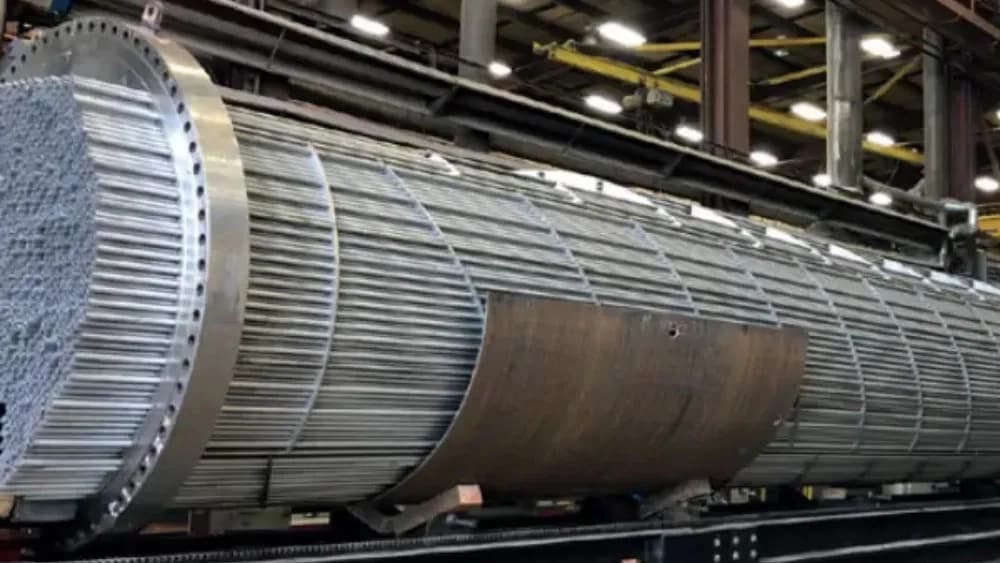
Tube heat exchanger (two pipes)
This type of heat exchanger consists of two distinct tubes, an inner tube that carries the heating fluid and an outer tube that contains the cooling fluid. Heat is transferred from the hot liquid to the cooling liquid. This type of heat exchanger is suitable for simple and low composition applications.
Spiral heat exchanger
And as one of the main options of this type of heat exchanger, it has tubes that are placed spirally away from an axis. This design helps to evenly distribute heat and is suitable for cases that require large temperature changes.
Coil heat exchanger
Helix heat exchanger is a type of heat exchanger that is used to transfer heat from one heating liquid to another cooling liquid. This type of heat exchanger has a spiral outer tube inside which the heating liquid flows, and a cooling liquid enters the heat exchanger from the outside through the spiral rings. These two liquids flow in parallel around each other. And the heat is transferred from the heating liquid to the cooling liquid. The spiral heat exchanger has a large heat transfer surface due to its special spiral design, which increases the heat transfer efficiency.
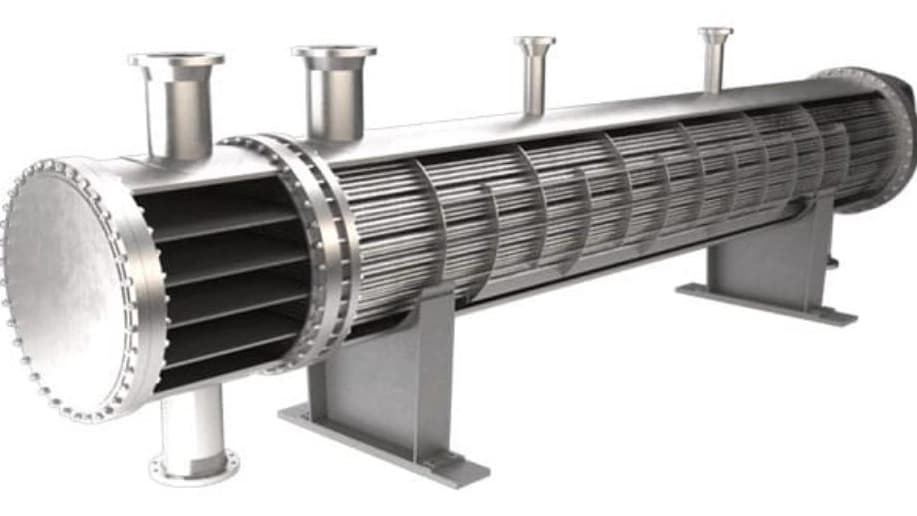
The shell and tube heat exchanger (loose tiles)
A shell and tube heat exchanger has an inner tube that carries the heat fluid and an outer shell in which the cooling fluid flows. This type of heat exchanger is suitable for high pressure and high temperature liquids and is usually used in the chemical and petrochemical industries.
Thermal converter
is another popular model where the tubes are equipped with fins to increase their heat transfer surface. In this type of heat exchanger, internal pipes are used to transfer heating liquid or hot gas, and metal fins are installed on these pipes. Fins are installed on the tubes, which increases the contact area between the heating fluid and the cooling fluid. This enhancement in the heat transfer surface increases the efficiency of the heat exchanger and allows more heat transfer. The finned tube heat exchanger is usually used in applications that require effective and high-speed heat transfer, such as refrigeration systems, air conditioning, steam production, and air and gas processing. Also, in some cases, different types of fins with different designs can be used. used differently to optimize heat transfer in specific conditions.
Applications of Types of heat exchanger
Types of heat exchangers are considered very vital equipment due to the importance of heat and heat transfer in various industries, and they facilitate the increase of efficiency and productivity of heating and cooling processes and systems.
Generally, heat exchangers are of various types It is used in many industries and applications. These devices are used to transfer heat from one environment to another:
1. Oil and gas industry
2. Chemical industry
Heat exchangers are used in the production of chemicals such as acids, alkalis, plastics and paints to cool and heat materials.
1. Production of electricity
In power plants, heat exchangers are used to convert water into steam to generate electricity. They are also a main choice for cooling nuclear reactors in nuclear power plants.
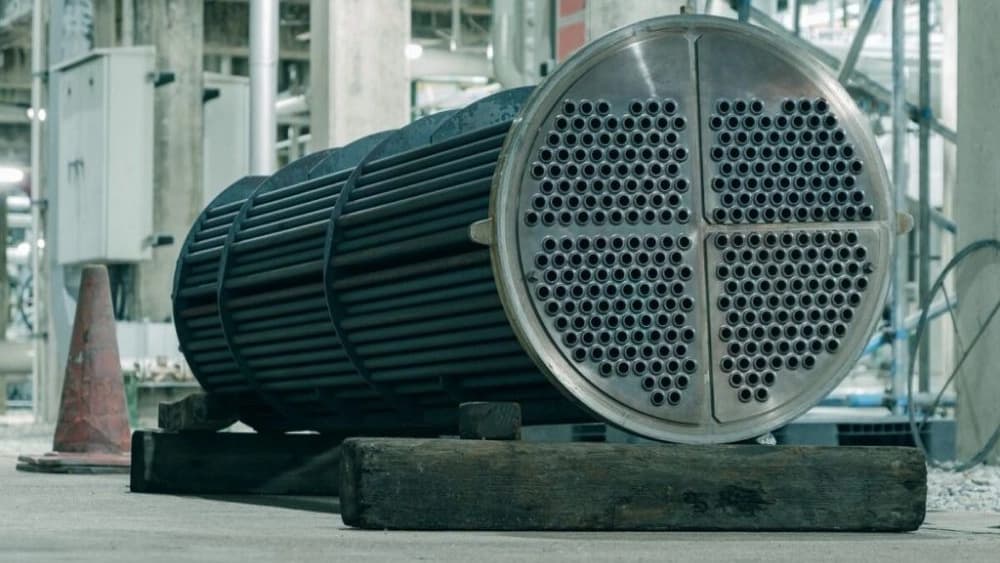
1. Car production and transportation
Types of heat exchangers are used in the automotive industry to cool engines and transfer heat from refrigeration and heating systems to car cabins.
1. Food industry
In the food industry, these equipments are used for thermal processing of food such as milk pasteurization, canning and steam production in cooking processes.
1. Curriculum and refrigeration
Types of heat exchangers are used in air conditioning and refrigeration systems to cool hot air or to cool thermostats and compressors.
1. Water and sewage industry
In water and wastewater treatment, heat exchangers are the main application in buildings in order to transfer heat and optimize processes.
1. Steel Industry:
Meanwhile, in steel production and related thermal processes, heat exchangers are used to cool and heat materials.